
End to end EV charger lifecycle platform connecting central operations and field technicians into one cohesive system.
Overview
EV charging reliability is an operations problem defined by installation quality, proactive maintenance, and field resolution speed. Iris R One was designed as a unified lifecycle management platform connecting central web operations and mobile field technicians into a cohesive, real time ecosystem.
Timeline
4 Months (Winter 2025)
Role
Lead Product Designer
Platform
Web Console & Field Mobile
Tech Stack
The Impact
Reduced Repeat Visits
Improved diagnostic context for field teams significantly decreased revisits and lowered operational costs.
Faster Triage & Resolution
Earlier intervention protocols and predictive R score models reduced system downtime windows.
Lifecycle Standardization
Enforced guided checklists with audit evidence to standardize installation quality and reduce rework.
The Problem
As EV networks scale, each charger becomes a live asset with unique failure patterns. The primary failure mode was the lack of a single operating model to connect monitoring, decision making, and field execution.
The Process & Operational Reality
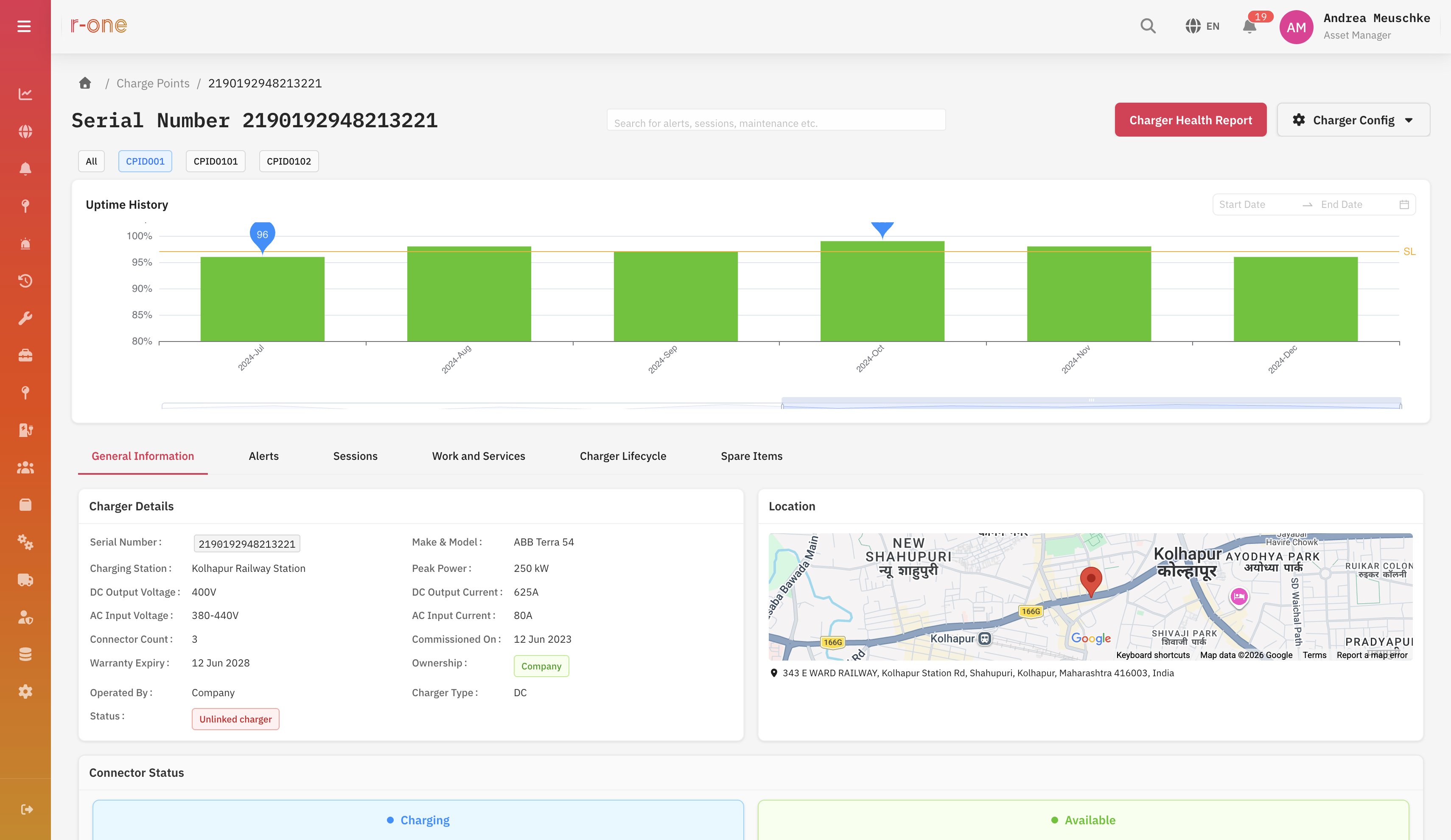
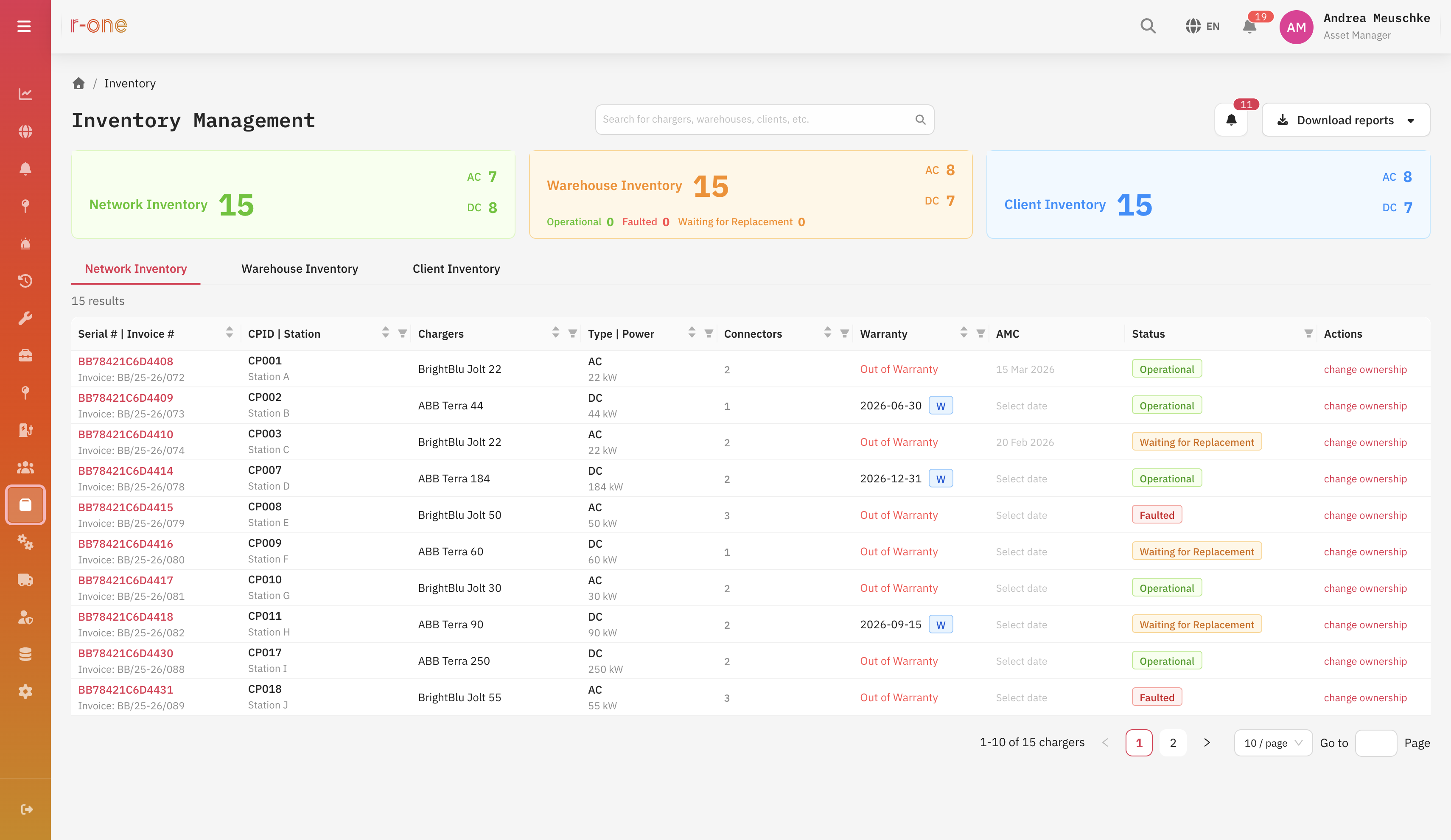
The platform establishes a shared operational state across two user groups working under different constraints. Assets, alerts, and work orders map back to a single lifecycle timeline.
Optimizing Decision Speed
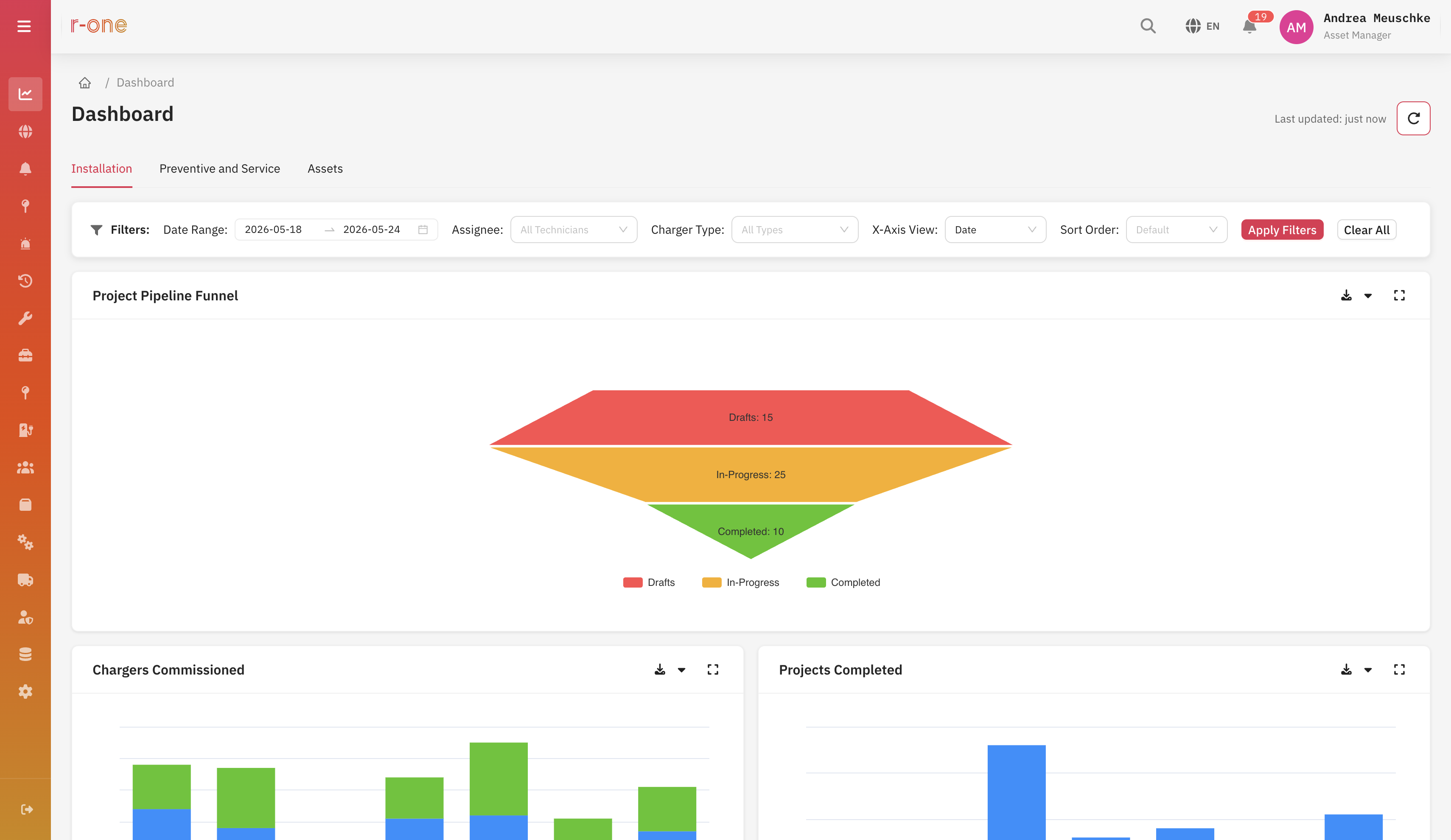
The web experience accelerates triage and coordination. It reduces decision friction, allowing planners to assign work based on real capacity and risk:
- Structures workflows around a detect, prioritize, assign, and track operational loop.
- Calculates predictive R scores to rank operational risk and assign field capacity.
- Provides a ranked view of critical alerts to prevent failures before downtime occurs.
The Solution
A comprehensive deep dive into the operational breakthroughs engineered to bring low-cognitive friction, verified security, and seamless ease.
Central Operations (Web)
Problem Tackled
Reducing cognitive load before commitment
Predictive Maintenance & R Score
Implemented a unified health layer using R score to combine telemetry and operational signals into an actionable metric, enabling ops teams to allocate field capacity before failures occur.
Problem Tackled
Designing for evaluation, not just browsing
Lifecycle Standardization
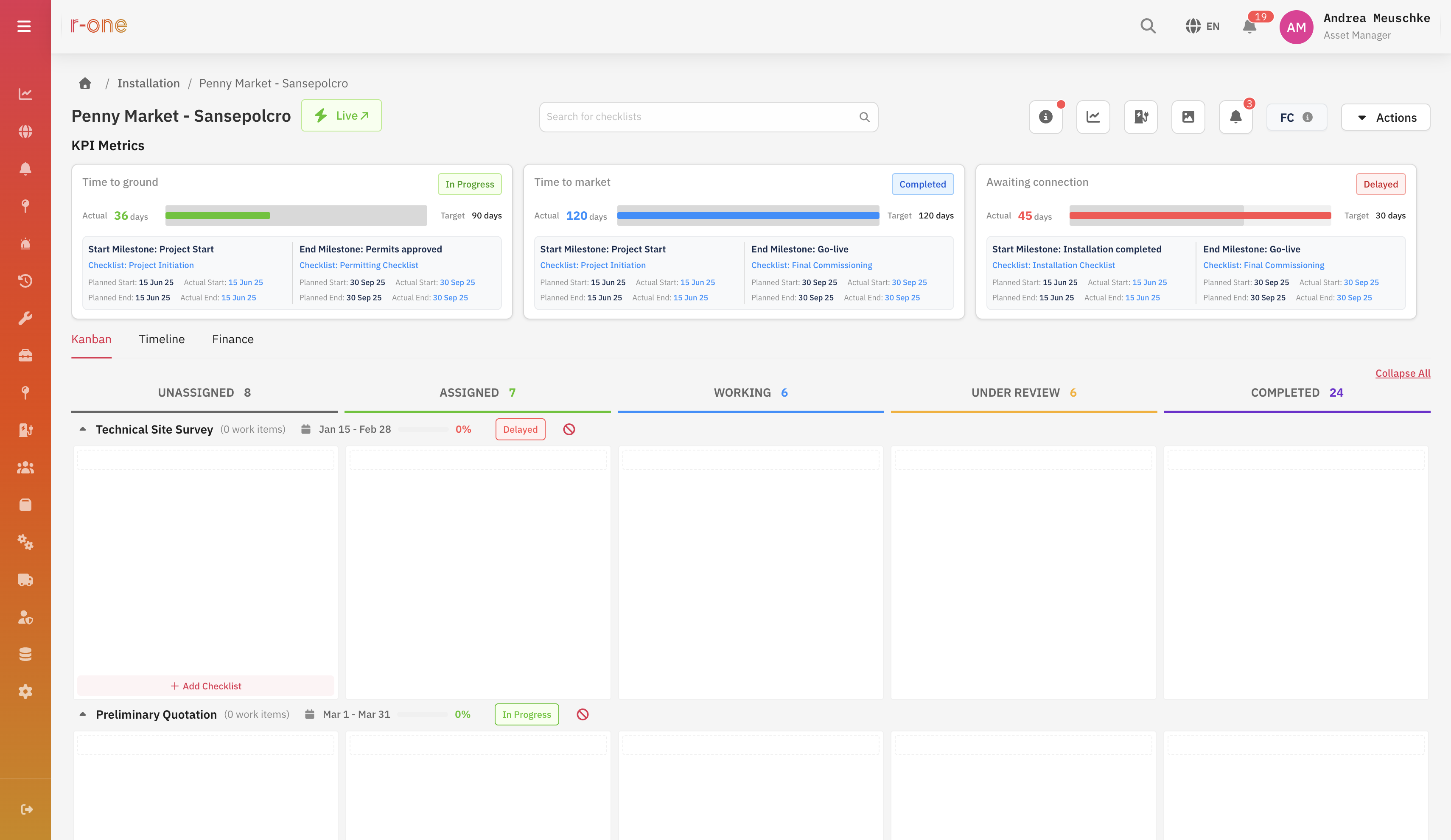
Standardized installation workflows into explicit checklists with audit evidence. This created a shared operational truth where both platforms stay synchronized in real time.
Field Technician (Mobile)
Problem Tackled
Reducing hesitation through predictable pathways
Guided Field Execution
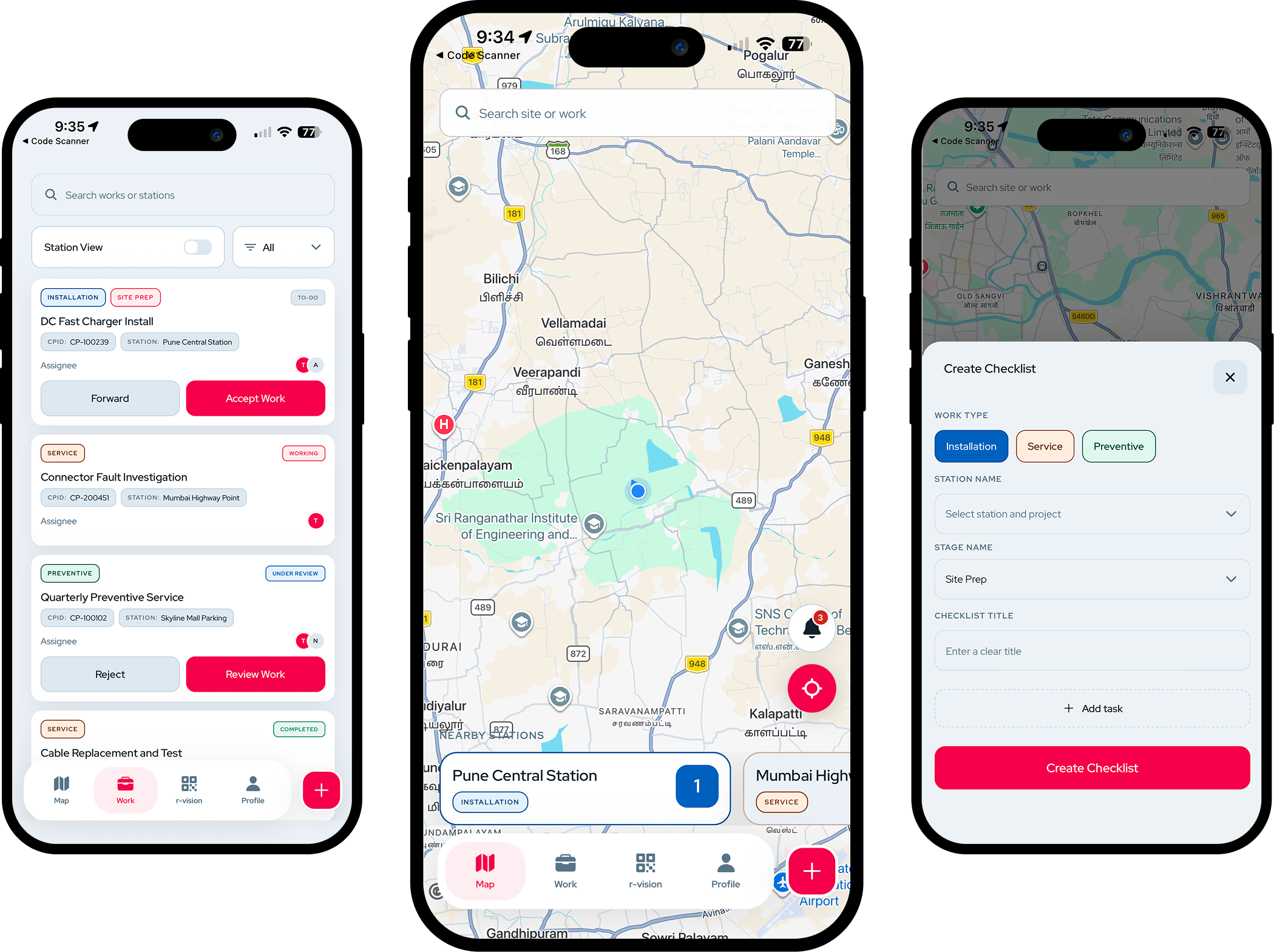
Designed the mobile app as a guided execution tool providing clear task intent, asset history, and fast evidence capture to standardize execution quality and improve first time fix rates.
Learnings
"Operational UX is Systems UX: coherence comes from shared objects and states, not just screens."
This project reinforced that adoption is a confidence problem. Users need clearer signals at the exact moments of commitment to execute effectively across distributed environments.
Explainability Drives Action
Predictive systems only work when users intuitively understand the actionable reasoning behind the data.
European Accessibility Compliance
Designed according to stringent WCAG European standards (W2AG), guaranteeing high contrast and readability for field workers in harsh outdoor environments.
Design for Decision Moments
Trust cues must appear exactly where critical commitment and dispatch decisions happen.
Let's craft the next operational breakthrough.
Have a complex transactional workflow, multi-role portal, or data-dense dashboard to design?